
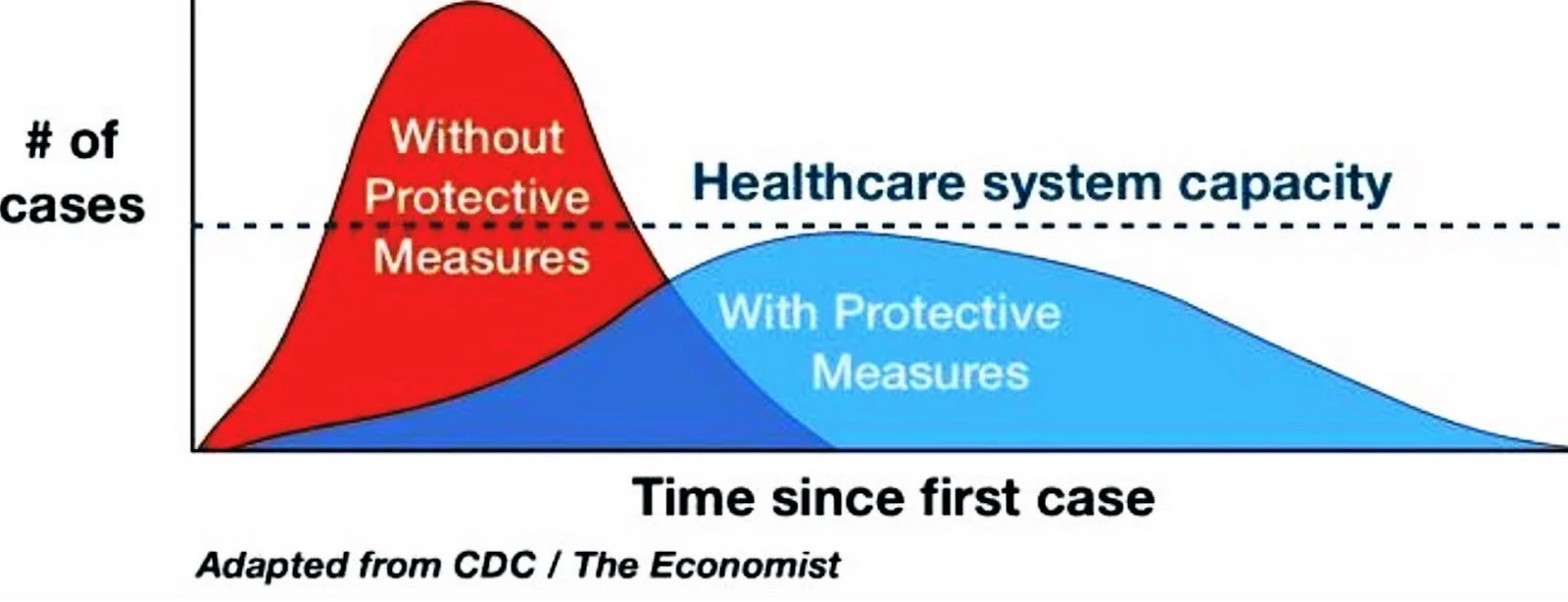
Flu vs Coronavirus 6 Differences
These are 6 of the main differences between flu and coronavirus

The World Health Organization has released a report outlining the differences between the flu and coronavirus.
There are some obvious similarities:
They both spread by contact. Touching a contaminated person or surface and then touching your face is a surefire way to get sick. (It is also possible that Covid-19 can be spread via droplets in the air from an infected person’s cough or sneeze.)
Many of the symptoms are similar: They both target the respiratory system, and in varying ways. Both cause fevers, tiredness and coughing. Severe respiratory cases can become pneumonia, which can kill.
This story is part of our ongoing coverage of the coronavirus/Covid-19 outbreak. You can also sign up to our dedicated newsletter.
Here are six differences between coronavirus and the flu:
— Coronavirus appears to spread more slowly than the flu. This is probably the biggest difference between the two. The flu has a shorter incubation period (the time it takes for an infected person to show symptoms) and a shorter serial interval (or the time between successive cases). Coronavirus’s serial interval is around five to six days, while flu’s gap between cases is more like three days, the WHO says. So flu still spreads more quickly.
— Shedding: Viral shedding is what happens when a virus has infected a host, has reproduced, and is now being released into the environment. It is what makes a patient infectious. Some people start shedding the coronavirus within two days of contracting it, and before they show symptoms, although this probably isn’t the main way it is spreading, the WHO says. (However, one non-peer-reviewed article this week also suggests that coronavirus patients are shedding huge amounts of the virus in these early stages, when they have either no symptoms or just mild ones.) The flu virus typically sheds in the first two days after symptoms start, and this can last for up to a week. But a study in the Lancet this week, which looked at patients in China, showed that survivors were still shedding the coronavirus for around 20 days (or until death). One was still shedding at 37 days, while the shortest time detected was eight days. This suggests coronavirus patients remain contagious for much longer than those with flu.
— Secondary infections. As if contracting coronavirus wasn’t bad enough, it leads to about two more secondary infections on average. The flu can sometimes cause a secondary infection, usually pneumonia, but it’s rare for a flu patient to get two infections after the flu. The WHO warned that context is key (someone who contracts coronavirus might already have been fighting another condition, for example).
— Don’t blame snotty kids—adults are passing coronavirus around. While kids are the primary culprits for flu transmission, this coronavirus seems to be passed between adults. That also means adults are getting hit hardest—especially those who are older and have underlying medical conditions. Experts are baffled as to why kids seem protected from the worst effects of the coronavirus, according to the Washington Post. Some say they might already have some immunity from other versions of the coronavirus that appear in the common cold; another theory is that kids’ immune systems are always on high alert and might simply be faster than adults’ in battling Covid-19.
— Coronavirus is far deadlier than the flu. Thus far, the mortality rate for coronavirus (the number of reported cases divided by the number of deaths) is around 3% to 4%, although it’s likely to be lower because many cases have not yet been reported. The flu’s rate is 0.1%.
— There is no cure or vaccine for the coronavirus. Not yet, anyway, although work is under way. There is, however, a flu vaccine—and everyone should get it, not least because being vaccinated could help lessen the load on overstretched medical services in the coming weeks.
Healthy Habits to Help Prevent Flu

Take everyday preventive actions to stop the spread of germs.
Try to avoid close contact with sick people.
While sick, limit contact with others as much as possible to keep from infecting them.
If you are sick with flu-like illness, CDC recommends that you stay home for at least 24 hours after your fever is gone except to get medical care or for other necessities. (Your fever should be gone for 24 hours without the use of a fever-reducing medicine.)
Cover your nose and mouth with a tissue when you cough or sneeze. After using a tissue, throw it in the trash and wash your hands.
Wash your hands often with soap and water. If soap and water are not available, use an alcohol-based hand rub.
Avoid touching your eyes, nose and mouth. Germs spread this way.
Clean and disinfect surfaces and objects that may be contaminated with germs like flu.
https://www.cdc.gov/flu/prevent/prevention.htm
The single best way to prevent seasonal flu is to get vaccinated each year, but good health habits like covering your cough and washing your hands often can help stop the spread of germs and prevent respiratory illnesses like the flu. There also are flu antiviral drugs that can be used to treat and prevent flu. The tips and resources below will help you learn about steps you can take to protect yourself and others from flu and help stop the spread of germs.
The seasonal flu vaccine protects against the influenza viruses that research indicates will be most common during the upcoming season. There are several flu vaccine options this flu season.
Avoid close contact.Avoid close contact with people who are sick. When you are sick, keep your distance from others to protect them from getting sick too.
Stay home when you are sick.If possible, stay home from work, school, and errands when you are sick. This will help prevent spreading your illness to others.
Cover your mouth and nose.Cover your mouth and nose with a tissue when coughing or sneezing. It may prevent those around you from getting sick. Flu and other serious respiratory illnesses, like respiratory syncytial virus (RSV), whooping cough, and severe acute respiratory syndrome (SARS), are spread by cough, sneezing, or unclean hands.
Clean your hands.Washing your hands often will help protect you from germs. If soap and water are not available, use an alcohol-based hand rub.
Handwashing: Clean Hands Save Lives
Tips on hand washing and using alcohol-based hand sanitizersIt’s a SNAP Toolkit: Handwashing
Hand washing resources from the It’s A SNAP program, aimed at preventing school absenteeism by promoting clean hands. From the School Network for Absenteeism Prevention, a collaborative project of the CDC, the U.S. Department of Health and Human Services and the American Cleaning Institute.
Avoid touching your eyes, nose or mouth.Germs are often spread when a person touches something that is contaminated with germs and then touches his or her eyes, nose, or mouth.
Practice other good health habits.Clean and disinfect frequently touched surfaces at home, work or school, especially when someone is ill. Get plenty of sleep, be physically active, manage your stress, drink plenty of fluids, and eat nutritious food.
Nonpharmaceutical Interventions (NPIs)
Everyday preventive actions, like nonpharmaceutical interventions (NPIs), are actions – apart from getting vaccinated or taking medicine – that people and communities can take to help slow the spread of illnesses like influenza (flu).
Preventing Flu at Work and School
At School
Find out about plans your child’s school, child care program, or college has if an outbreak of flu or another illness occurs and whether flu vaccinations are offered on-site.
Make sure your child’s school, child care program, or college routinely cleans frequently touched objects and surfaces, and that they have a good supply of tissues, soap, paper towels, alcohol-based hand rubs, and disposable wipes on-site.
Ask how sick students and staff are separated from others and who will care for them until they can go home.
Learn more about preventing the flu, common questions and answers, and poster materials for schools: Resources for Schools, Childcare Providers and Parents
At Work
Find out about your employer’s plans if an outbreak of flu or another illness occurs and whether flu vaccinations are offered on-site.
Routinely clean frequently touched objects and surfaces, including doorknobs, keyboards, and phones, to help remove germs.
Make sure your workplace has an adequate supply of tissues, soap, paper towels, alcohol-based hand rubs, and disposable wipes.
Train others on how to do your job so they can cover for you in case you or a family member gets sick and you have to stay home.
If you begin to feel sick while at work, go home as soon as possible.
Learn more about how you can help prevent the spread of respiratory illnesses like flu at work : Flu Prevention at Work
Corona Virus (COVID-19) Interim Guidance for Businesses and Employers
for those that regret past inaction
The best time to plant a tree is twenty years ago. The second best time is now.
-anonymous
Daily Review
A while back Amazon made changes on their Kindle Highlights back-end.
Sadly, Kindle Daily Review was not incorporated into Amazon's migration to Kindle notes.
https://kindle.amazon.com/refresh/
The Kindle Daily Review was based on the Ebbinghaus forgetting (retention) curve.
https://en.wikipedia.org/wiki/Forgetting_curve
The forgetting curve hypothesizes the decline of memory retention in time. This curve shows how information is lost over time when there is no attempt to retain it.[1] A related concept is the strength of memory that refers to the durability that memory traces in the brain. The stronger the memory, the longer period of time that a person is able to recall it. A typical graph of the forgetting curve purports to show that humans tend to halve their memory of newly learned knowledge in a matter of days or weeks unless they consciously review the learned material.
The forgetting curve supports one of the seven kinds of memory failures: transience, which is the process of forgetting that occurs with the passage of time.
is now:
https://read.amazon.com/notebook
san's the Daily Review.
;-(