A Primer for the Media on Viruses, Vaccines, and Covid-19

IMG_0862.png

…No vaccine “wipes” out a virus. Vaccines are not cures. Vaccines are not preventatives. Vaccines do not seek out and destroy. As an example, we have had vaccines for influenza for decades (since the 1940s) and each year influenza exacts a toll on humans, including sometimes those who have been vaccinated. Influenza is not even close to being “wiped out.” We manage it at best.

Here is a short list of infectious diseases that are a part of our natural existence and any of these have the potential to cause death in any given individual..

1.          Bacterial Infections. (Cocci) Pneumonia, Staphylococcal, Streptococcal, Enterococcal, Toxic Shock; (Gram Positive Bacilli) Diphtheria, Anthrax, Listeriosis; (Gram Negative Bacilli) Cholera, Trench Fever, E. Coli, Plague, Salmonella

2.          Spirochetes Infections. Lyme disease, Yaws, Leptospirosis

3.          Anaerobic Bacterial Infections. Botulism, Tetanus, Clostridium

4.          Rickettsiae Infections. Murine Typhus, Rocky Mountain Spotted Fever

5.          Mycobacteria. Tuberculosis, Leprosy

6.          Fungal Diseases. Aspergillosis, Candidiasis, Histoplasmosis

7.          Parasitic Infections. Nematodes (roundworms), Trematodes (flukes), Cestodes (tapeworms)

8.          Protozoan Infections. Amebiasis, Giardiasis, Malaria, Encephalitis, Toxoplasmosis

9.          Respiratory Viruses. Influenza/Parainfluenza, Adenovirus, Rhinovirus, Coronavirus

10.       Herpes Viruses. Chickenpox, Mononucleosis, Cytomegalovirus, Herpes Zoster

11.       Enteroviruses. Polio, Hand-Foot-Mouth Disease (not the same as the politician’s “foot-in-mouth” disease)

12.       Various Viradae Viruses. Dengue, Hanta, Lassa, Ebola, Marburg, Yellow Fever

13.       Immunodeficiency Virus. HIV

14.       Misc. Viruses. Measles, Mumps, Rubella, Smallpox

15.       Sexually Transmitted Diseases. Syphilis, Gonorrhea

16.       Mycoplasma

Many of these diseases have vaccines available, many do not. Some vaccines are more effective than others. But there has been only one that we have eradicated naturally, i.e. “wiped out,” and that is smallpox. 

…So, is coronavirus deadly? Not really; in fact, most viruses are not truly deadly. The outcome may be death, but that is different than actually being deadly. A bite from a black mamba snake is deadly due to the potent venom. Viruses are parasites, unlike bacteria. Viruses depend on the support of their host. If a virus is to survive, it needs the host to survive. What kills most people with viruses is their own immune system weakness, but sometimes the immune overreaction can kill. That weakness is taken advantage of by bacterial infections. Also, generally poor health conditions can lead to organ failure. 

1.    The coronavirus, SARS-COV-2, is not “deadly.” It can lead to death in very well-identified segments of the population, e.g. the infirmed elderly or poor, but it is very rarely death by the virus. It may be death by bacteria or other causes, yes, but very rarely, if ever, by virus. This is exactly the same as other URI and many other infectious diseases.

2.    The mortality that is associated with Covid has little impact on the expected mortality rate since the population that was most at risk also had a very low life expectancy. 

3.    Increases in mortality in the US are more likely associated with increases in drug OD and suicides, which are collateral damage due to the policies imposed during 2020.

4.    Any vaccine that may be developed and approved for coronavirus is at best a boost to the immune system. It will not prevent infection or wipe out the virus. The degree of effectiveness will only be determined over time.

5.    People who have experienced Covid or are otherwise healthy do not need a vaccine. But it should be their choice, as it should be for all.

airborne coronavirus transmission

IMG_7807.jpeg

Jose-Luis Jimenez, a chemistry professor at the University of Colorado, Boulder, who has studied aerosols for 20 years, decided to go straight to the public with the latest advice on how people can protect themselves and those around them. He convened a group of nine other experts in the field to create this open-access Google Doc offering comprehensive advice on what you need to know about aerosol transmission, from best practices for masks to whether it’s safe to travel by airplane.

… Germany has started saying that good ventilation is the cheapest and best method to reduce the spread of the virus

… Aerosol transmission is the main way this virus spreads: the only question if it’s 70%, 80%, or 90%. Ballistic droplets are a negligible way to spread the virus.

… if you go outside, transmission drops tremendously. The evidence is clear.

…you want to breathe in as little of others’ as possible. Everyone you are around, imagine they are breathing smoke, and try to avoid it.

… interpret the science for any given situation. Avoid anything that involves breathing in a lot of other people’s breath. Do things outdoors. But the most important things are free.

…open a window

…ventilation and air filtering matter,

IMG_7806.jpeg

How can I protect myself from aerosol transmission indoors?

We can never be perfectly safe, only safer.  Hence, we need to take as many steps as possible to reduce the risk of our activities.  You should try to avoid or reduce as much as possible situations that facilitate inhaling the “smoke” (exhaled air) from others. To reduce risk avoid:

  • Crowded spaces

  • Close proximity to others

  • Low ventilation environments

  • Long durations

  • Places where people are not wearing masks

  • Talking, and especially loud talking / shouting / singing

  • High breathing rates (e.g., indoor aerobic exercise)

Each one of these features potentially increases the aerosol concentration you might inhale indoors. So if you must enter one of the above situations, complete your tasks as quickly as possible to reduce your exposure duration and risk

Should I keep washing my hands and being careful about elevator buttons, light switches, door knobs etc?

Yes! While we think that aerosol transmission is more important than this “touching” (fomite) route, there is evidence that the virus can be transmitted in this way. So you should keep washing your hands, using hand sanitizer etc. But you should pay at least as much attention to the air you breathe as you do to sanitizing surfaces and your hands.

Asymptomatic vs Presymptomatic

Different approaches to determining the presence and prevalence of asymptomatic and presymptomatic SARS-CoV-2 transmission have notable shortcomings, which were highlighted in this review and limit our ability to draw definitive conclusions.

Asymptomatic individuals are defined as individuals who test RT-PCR positive, but lack symptoms that would indicate SARS-CoV-2 infection. While some individuals may go the entire course of infection and never experience symptoms, other individuals who initially present as asymptomatic may go on to develop symptoms days or weeks later. The individuals who will later develop symptoms are defined as being presymptomatic.

…All case reports of asymptomatic and presymptomatic transmission are confounded by the highly subjective nature of reporting symptom onset and exposure date. Factors like age, cultural norms, and public communication about the pandemic may influence when people report their symptoms beginning. For example, an older person with chronic illness may attribute muscle and joint pain to age, whereas a younger person may call that a symptom. Additionally, as the pandemic has progressed, our categorization of what is considered a symptom has expanded.

the possibility of asymptomatic transmission is a hypothetical, as a positive RT-PCR test does not confirm that an individual is contagious. This study failed to provide insight into the feasibility of actual transmission during presymptomatic or asymptomatic infection because the authors failed to report Ct values of RT-PCR positive individuals, did not culture virus, and did not identify possible transmission chains.

Different assumptions about the shape of the distributions will impact when and if presymptomatic transmission will occur. A line indicating the threshold of transmissibility is shown in purple, which is currently believed to be 106 copies per mL. T…

Different assumptions about the shape of the distributions will impact when and if presymptomatic transmission will occur. A line indicating the threshold of transmissibility is shown in purple, which is currently believed to be 106 copies per mL. The intersection of the purple line with the various curves would show when an individual becomes contagious. In these hypothetical distributions, a normal and Weibull distribution suggest significant presymptomatic transmission, while a gamma and lognormal distribution seem to suggest limited presymptomatic transmission.

suppress random hijacking of automobile bluetooth by Apple iTunes/Music Application

why does my iPhone
start playing a random song
when starting my car

IMG_7745.png

(a ongoing Shortcuts Automation Project)

Because I would rather hear this predictably, than any other unexpectedly.

When I last searched:

Why does my iPhone start playing a random song when I start my car?
About 73,100,000 results (0.72 seconds)

My iphone hijacks my bluetooth in my car.
About 669,000 results (0.49 seconds)

iPhone plays random song when starting my car.
About 14,900,000 results (0.42 seconds)

Please make it stop. My iPhone playing random songs is driving me crazy.
About 18,700,000 results (0.79 seconds)

shortcuts project temperature logging v1.0

IMG_7650.jpeg

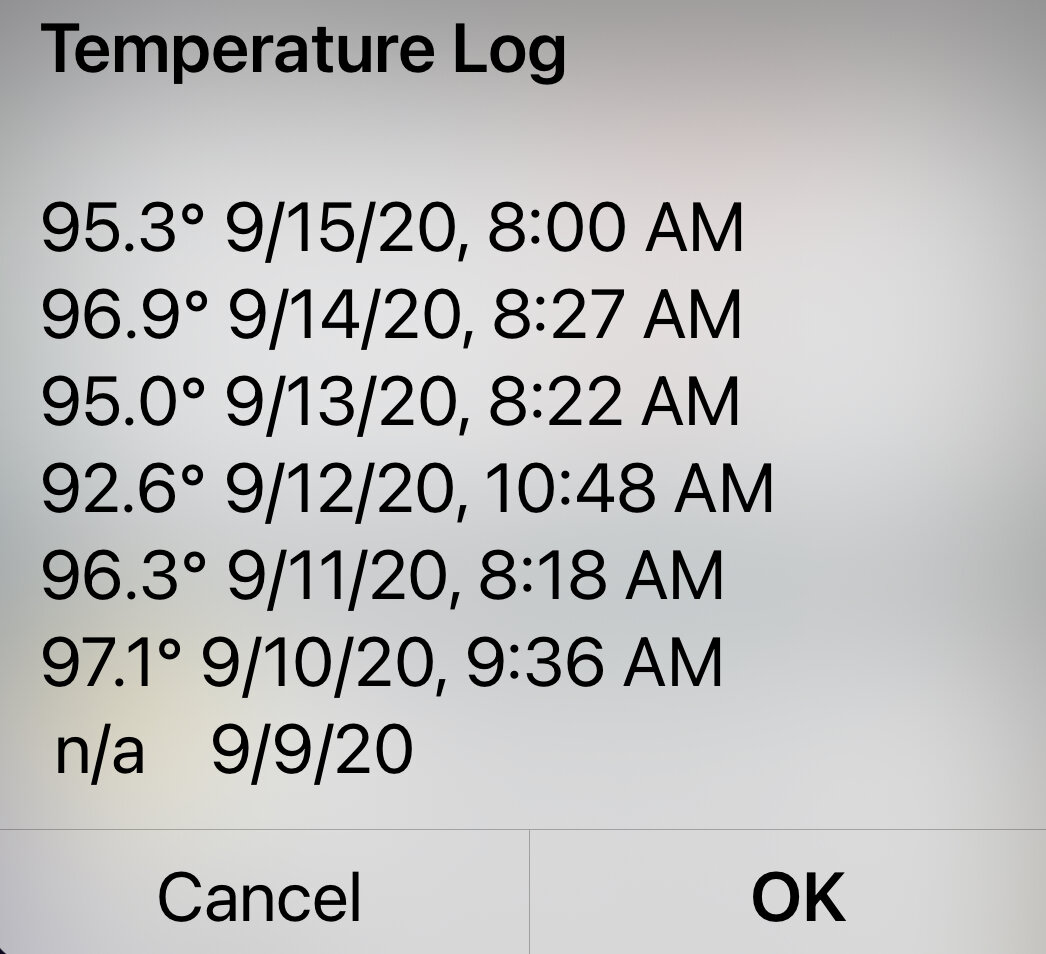
Completed my v1.0 scripting project for Temperature logging and presenting. (Had transitioned from calendar logging to HealthKit entry months ago. Automating the entry was simple enough, but wanted faster/better access to history.

Features:

Automates entry of temperature from Apple Watch or iPhone

Displays 7 day history optimized separately for both Apple Watch and iPhone screen.

-rws

Watch display.

Watch display.

iPhone display.

iPhone display.