What's the Frequency?

rt-pcr.png

Description of the problem: WHO has received user feedback on an elevated risk for false SARS-CoV-2 results when testing specimens using RT-PCR reagents on open systems.  

As with any diagnostic procedure, the positive and negative predictive values for the product in a given testing population are important to note. As the positivity rate for SARS-CoV-2 decreases, the positive predictive value also decreases. This means that the probability that a person who has a positive result (SARS-CoV-2 detected) is truly infected with SARS-CoV-2 decreases as positivity rate decreases, irrespective of the assay specificity. Therefore, healthcare providers are encouraged to take into consideration testing results along with clinical signs and symptoms, confirmed status of any contacts, etc.

But, What’s the Frequency?!!!

What number of Amplification Cycles being used in the PCR tests?

Mathematics of Testing

Marshall Project (digesting the numbers)

the-marshall-project.png

…One in every five state and federal prisoners in the United States has tested positive for the coronavirus, a rate more than four times as high as the general population.

…As the pandemic enters its tenth month—and as the first Americans begin to receive a long-awaited COVID-19 vaccine—at least 275,000 prisoners have been infected, more than 1,700 have died and the spread of the virus behind bars shows no sign of slowing.

(Without information on rate of influx or release, will assume steady-state. -rws)

Deriving from the above:

numeric type
1,375,000Total Population
275,000Infections
1,700Deaths
20%Infection Ratio
0.62%Death/Infection Ratio
0.12%Death/ Prison Population Ratio

Separately….

Counts of COVID-19 cases and presumed or confirmed deaths among prisoners were collected daily by the UCLA Law COVID-19 Behind Bars Data Project from March 31, 2020, to June 6, 2020.

Novel coronavirus disease 2019 (COVID-19) represents a challenge to prisons because of close confinement, limited access to personal protective equipment, and elevated burden of cardiac and respiratory conditions that exacerbate COVID-19 risk among prisoners…. systematic data are lacking

The COVID-19 case rate for prisoners was 5.5 times higher than the US population case rate of 587 per 100 000. The crude COVID-19 death rate in prisons was 39 deaths per 100,000 prisoners, which was higher than the US population rate of 29 deaths per 100,000.

[As is age and morbidity data is not detailed, would require deeper analysis to interpret a 5.5 times higher case rate but only a 1.3 times higher death rate. Additionally, it would seem appropriate to consider this data in the context of historical general prison health/death figures. -rws]

Mortality in State and Federal Prisons, 2001-2016 – Statistical Tables

In 2016, a total of 4,117 state and federal prisoners died in publicly or privately operated prisons.

From 2015 to 2016, deaths in state prisons increased from 296 to 303 deaths per 100,000 state prisoners. [~ 0.30%]

From 2015 to 2016, deaths in federal prisons decreased for the first time since 2012, from 283 to 252 deaths per 100,000 federal prisoners. [~ 0.25%]

Illness-related deaths made up 86% of deaths in state prisons in 2016, with more than half of those being due to cancer (30% of all deaths) or heart disease (28%).

Control Volume

IMG_8585.png

In continuum mechanics and thermodynamics, a control volume is a mathematical abstraction employed in the process of creating mathematical models of physical processes. In an inertial frame of reference, it is a fictitious volumefixed in space or moving with constant flow velocity through which the continuum (gas, liquid or solid) flows. The surface enclosing the control volume is referred to as the control surface.

Fluid Dynamics and Masks

IMG_0923.jpeg

Effects of mask-wearing on the inhalability and deposition of airborne SARS-CoV-2 aerosols in human upper airway

…In this study, we found that the protective efficacy of a mask for the nasal airway decrease at lower inhalation flow rates. Particularly at 15 l/min, the nasal retention of 1 µm–3 µm ambient aerosols is even higher by wearing a 65% filtration mask than without a mask at all.

IMG_8583.jpeg

…Even though face masks are well accepted as tools useful in reducing COVID-19 transmissions, their effectiveness in reducing viral loads in the respiratory tract is unclear. Wearing a mask will significantly alter the airflow and particle dynamics near the face, which can change the inhalability of ambient particles. The objective of this study is to investigate the effects of wearing a surgical mask on inspiratory airflow and dosimetry of airborne, virus-laden aerosols on the face and in the respiratory tract. A computational model was developed that comprised a pleated surgical mask, a face model, and an image-based upper airway geometry. The viral load in the nose was particularly examined with and without a mask. Results show that when breathing without a mask, air enters the mouth and nose through specific paths. When wearing a mask, however, air enters the mouth and nose through the entire surface of the mask at lower speeds, which favors the inhalation of ambient aerosols into the nose.

IMG_0924.jpeg

Wearing a mask can notably distort the inhalation aerodynamics in comparison to that without a mask.

The nose has a unique role in this COVID-19 pandemic for several reasons. It is the first physical barrier of our body to keep ambient aerosols from getting into the respiratory tract; unlike the mouth, the downward nostrils can effectively prevent large particles from being inhaled due to their large inertia. The nasal mucus and immune cells constitute the second line of defense against invading viruses. However, the nasal goblet secretory cells are also one of the three confirmed binding sites for COVID-19 viruses, where two necessary enzymes for cell invasion, ACE2 (angiotensin-converting enzyme 2) and TMPRSS2 (type II transmembrane serine protease), coexist.

…The other two sites with these two enzymes coexisting are the surface epithelial cells of the alveoli and the ileal absorptive cells in the small intestine.

…The overall lower speeds of the respirable particles after wearing a mask, as well as an increased area of respiration, can increase the chance of respirable particles to land on the face or being inhaled into the mouth and nose. This unexpected finding raises an alarm that wearing masks with very low filtration efficiencies may lead to a higher chance of deposition of ambient aerosols and thus can do more harm than protection.

https://www.bbc.co.uk/bitesize/guides/z3xq6fr/revision/2

IMG_8582.jpeg

In summary, the effects of wearing a three-layer surgical mask on airflow and aerosol dynamics were examined in a mask–face-airway model in comparison to without a mask. A better understanding of the factors involved in determining the dosimetry of ambient aerosols on the face and in the respiratory tract was obtained. Specific findings are as follows:

1. Wearing a mask significantly slows down inspiratory flows and extends respiration zones, which favors the inhalability of ambient aerosols into noses.

2. High flow speed and elevated particle concentrations are observed in the mask pleats.

3. Wearing a mask significantly reduces particle penetration into the lungs, regardless of the filtration efficiency of the mask. Wearing a 65%-filtration mask can reduce lung deposition by three folds for particles of size 1 µm–10 µm.

4. With a 65% mask filtration efficiency that is typical for a three-layer surgical mask, deposition is reduced by wearing a mask for all particle sizes considered, except 1 µm–3 µm, for which equivalent dosimetry in the upper airway was predicted.

5. Wearing a mask protects the upper airway (particularly the nose and larynx) best from particles larger than 10 µm, while it protects the face and lungs best from particles less than 10 µm (PM10).

6. The mask protection of the nasal airway, whose goblet secretory cells are binding sites for SARS-CoV-2, decreases at lower inhalation flow rates (15 l/min or less).

Makes this twitter thread a more interesting read.

Do mask mandates work?

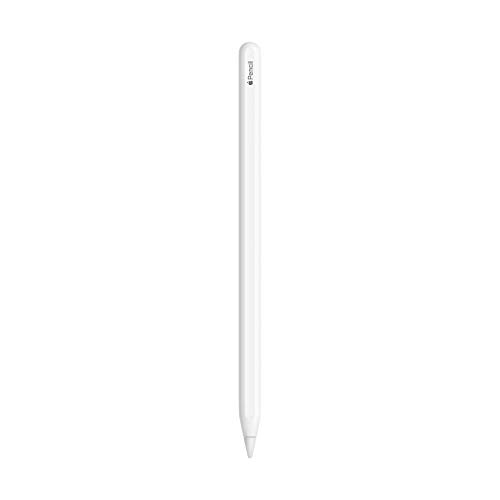
Apple Pencil

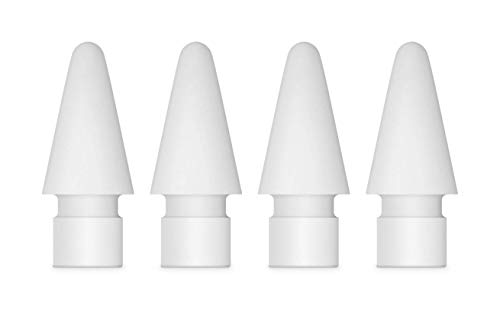
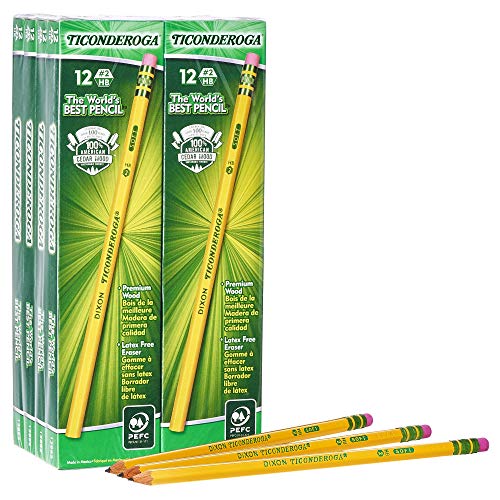
Earlier this month I dropped my Apple Pencil. Somehow it did more than just dent/break the stylus nub, it damaged the actual internal stylus mechanism. It still identified as charging/paired, but even after replacing the stylus it would not work. Based on retail pricing I could have used/damaged 790 standard pencils over the past eighteen months, but it would not have been nearly as memorable. -rws

What number of Amplification Cycles being used in the PCR tests?

IMG_0913.png

The PCR test amplifies genetic matter from the virus in cycles; the fewer cycles required, the greater the amount of virus, or viral load, in the sample. The greater the viral load, the more likely the patient is to be contagious.

…This number of amplification cycles needed to find the virus, called the cycle threshold, is never included in the results sent to doctors and coronavirus patients, although it could tell them how infectious the patients are. [why?]

…The C.D.C.’s own calculations suggest that it is extremely difficult to detect any live virus in a sample above a threshold of 33 cycles. Officials at some state labs said the C.D.C. had not asked them to note threshold values or to share them with contact-tracing organizations. [why?]

…Any test with a cycle threshold above 35 is too sensitive, agreed Juliet Morrison, a virologist at the University of California, Riverside. “I’m shocked that people would think that 40 could represent a positive,” she said.

A more reasonable cutoff would be 30 to 35, she added. Dr. Mina said he would set the figure at 30, or even less.

…Officials at the Wadsworth Center, New York’s state lab, have access to C.T. values from tests they have processed, and analyzed their numbers at The Times’s request. In July, the lab identified 872 positive tests, based on a threshold of 40 cycles.

In Massachusetts, from 85 to 90 percent of people who tested positive in July with a cycle threshold of 40 would have been deemed negative if the threshold were 30 cycles, Dr. Mina said. “I would say that none of those people should be contact-traced, not one,” he said.

…The F.D.A. noted that people may have a low viral load when they are newly infected. A test with less sensitivity would miss these infections.

…But that problem is easily solved, Dr. Mina said: “Test them again, six hours later or 15 hours later or whatever,” he said. A rapid test would find these patients quickly, even if it were less sensitive, because their viral loads would quickly rise.